
 630-584-5550


Recent Blog Posts
Can You Be Found in Contempt of Court for Failure to Comply with the Divorce Decree?
 A divorce decree is a court order. This means that it can be enforced by the court. Failure to follow through on child support, spousal maintenance, the parenting plan, and payment of debts can result in being held in contempt of court.
Contempt can lead to fines, jail time, and an order to pay your spouse's legal fees. A Kane County, IL post-divorce enforcement lawyer can explain the risks of ignoring court orders in 2026 and what to do if your ex-spouse is not complying with theirs.
What Does Contempt of Court Mean in an Illinois Divorce?
"Contempt of court" means that someone has either been disrespectful in actual court proceedings or has refused to follow the terms of a court order. In a divorce, contempt of court is most often used to get someone to obey the terms of their court order.
The process generally starts when one spouse files a petition for a "rule to show cause." This means the other spouse must appear in court and explain why they shouldn't be held in contempt of court for their actions.
Can I Modify a Child Support Order in Illinois?
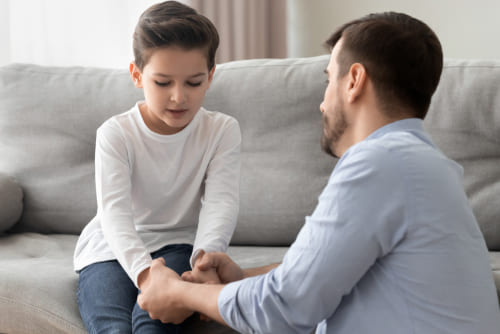 Child support orders in Illinois can be updated after they’ve been issued. Whether an order qualifies for modification depends on the reasons the parent or parents have for changing it. In some cases, the amount of time that has passed since the last change can also be relevant.
A Kane County, IL child support attorney can help you find out whether your situation may qualify for a modification in 2026.
When Can a Child Support Order Be Modified in Illinois?
Under 750 ILCS 5/510, an Illinois child support order can be changed in several situations. One is when there has been a substantial change in circumstances since the order was entered or last modified.
A modification may also be available in certain HFS cases when the current amount differs from the guideline amount by at least 20 percent and at least $10 per month, and at least 36 months have passed since the order was entered or last changed. This rule may not apply if the existing order intentionally departed from the guidelines and the reason for that departure has not changed.
How Is Paternity Established in Illinois?

Paternity is an important legal status that can give a child inheritance rights and provide a path to child support. Until parentage is legally established, a father might not be able to ask the court for parenting time or other parental rights.
Illinois gives parents several ways to establish paternity. Which one is used depends on the situation.
A Kane County, IL paternity lawyer can help you take the correct legal steps to establish paternity in 2026.
Why Does Establishing Paternity Matter in Illinois?
Establishing paternity makes a father the child’s legal parent, with the rights and duties that come with that. For the child, paternity can open the door to:
- Child support from both parents
- Health insurance through either parent’s plan
- Inheritance rights
Should I Get a Legal Separation Instead of a Divorce?

Not every couple who wants time apart is ready to end a marriage for good. Some want space to think things through. Others can’t divorce for religious or personal reasons but still need to sort out money and parenting. A legal separation offers a gateway for couples to stay married while setting legal rules for support, parenting, and other issues.
If you’re thinking about a legal separation in 2026, a St. Charles, IL family law attorney can help you understand the potential benefits.
What Is the Difference Between a Legal Separation and a Divorce in Illinois?
A divorce, called a dissolution of marriage in Illinois, legally ends a marriage. Once it’s finalized, you’re no longer married, and you can’t undo it except by getting remarried.
In a legal separation, you and your spouse stay legally married while living apart. A court order can address temporary financial support and other issues. If you later decide to reconcile, you won’t need to remarry. If either spouse decides the marriage really is over, they can file for divorce.
Will My Prenup Be Honored in an Illinois Divorce?

If you’re facing a divorce with a signed prenuptial agreement, that agreement may help the process go more smoothly. Illinois courts typically enforce prenuptial agreements as long as they are legally valid. Whether yours will be honored by the court depends on the terms and what the circumstances were when it was signed.
A Kane County, IL family law lawyer can review your agreement and explain what changes, if any, are possible during your divorce in 2026.
Does Illinois Enforce Prenuptial Agreements?
Illinois follows the Illinois Uniform Premarital Agreement Act (750 ILCS 10/) for agreements signed on or after January 1, 1990. This act outlines requirements for a prenup to be considered valid by a court. As long as these requirements are met, courts will typically enforce the terms of a prenup.
Will I Lose Child Support if My Child Starts Working?

It’s an exciting moment when your child gets their first job. Even if it’s a simple summer gig, they have the opportunity to begin building skills they’ll rely on for the rest of their life. However, additional income may raise questions about whether you’ll still get the full amount of child support that was previously ordered.
Illinois child support is mainly based on the parents’ incomes and parenting arrangements. A child’s part-time or summer job does not automatically reduce or end child support. The ordered amount remains in place unless the court changes it or the order reaches its termination date.
A Kane County, IL child support attorney can help address any concerns about reductions to your child support order in 2026.
What Determines the Amount of Child Support Ordered in Illinois?
Illinois uses an income shares model to calculate child support (750 ILCS 5/505). The court combines both parents’ net incomes and uses the state’s support schedule to find the basic support amount. Each parent’s share is based on their portion of the combined income. Parenting time can also affect the amount in some cases.
What Happens to Jewelry and Other High-Value Items in an Illinois Divorce?

What Happens to Jewelry and Other High-Value Items in an Illinois Divorce?
Collections of items that have been built up over years, such as jewelry or art, can be worth a great deal of money. Not only that, but many people are emotionally attached to the pieces themselves. It can be hard to accept that pieces might be split between spouses, especially if one of them cares significantly more about the items than the other.
How this kind of division actually happens depends on the individual divorce case. Whether items will be divided at all depends on when and how they were acquired. If keeping a collection together is very important for one spouse, the spouses may agree that the person can keep it. However, the other spouse will need to be compensated with other valuable assets to create a fair division.
If you're worried about what happens to these items in your divorce, a St. Charles, IL asset division lawyer can help you understand your options in 2026.
Do I Need a Lawyer for Divorce Mediation in Illinois?

Mediation can make an Illinois divorce faster, less expensive, and less stressful than a courtroom fight. You can often take part in mediation without your own lawyer. Still, having legal advice can help protect your rights during the process.
A Kane County, IL divorce attorney can help you decide whether mediation is a good option for you in 2026. They can also explain how a lawyer can help during the process.
What Happens During Divorce Mediation in Illinois?
A mediator is a neutral person who helps you and your spouse work through disputed issues in your divorce. Property division, parenting time, and support payments are common topics. The mediator doesn’t represent either of you and can’t give legal advice. Their job is to help you both communicate and reach an agreement, not to advocate for one side or the other.
Mediation sessions in Illinois are generally confidential under the Uniform Mediation Act (710 ILCS 35/4). This means that mediation communications usually cannot be used as evidence if the case later goes to court. However, there are still some exceptions. Sessions can happen in person or online. Couples can meet with the mediator together or in separate rooms, depending on what works best for them.
What to Know About Illinois Stepchild Adoption

Adopting your stepchild makes you their legal parent. You gain the right to make medical and school decisions. You can also keep raising the child if your spouse passes away, and the child can inherit from you as your legal child. Adoption can legally confirm a parent-child relationship that is already important to both of you.
However, a stepparent does not automatically become a legal parent. In most cases, the child’s other legal parent must agree to the adoption or have their parental rights ended before the adoption can be completed.
If you are looking to adopt a stepchild in 2026, a St. Charles, IL adoption lawyer can help you understand what needs to happen to legally formalize your relationship.
Who Can Adopt a Stepchild in Illinois?
To use the stepparent adoption process, you must be married to or in a civil union with the child’s legal parent. An unmarried partner cannot file as a stepparent, even if they are closely involved in the child’s life. Same-sex spouses follow the same adoption rules as other married couples.
Signs It Might Be Time to Consider Divorce

A rough patch in a marriage does not always indicate that a divorce is pending. In many cases, couples can work out their issues and come out stronger for it. Some situations, however, are not salvageable. A St. Charles divorce attorney can explain some signs that it might be time to consider divorce in 2026.
What are the Signs that You Should Consider a Divorce in Illinois?
The following may be indicators that your marriage is no longer serving you or your spouse.
You Are Experiencing Abuse in Your Marriage
First and foremost, if your marriage is abusive, your safety should come first. No one deserves to be physically, mentally, or emotionally abused by a partner.
If your partner is violent, controls your life or your finances, tries to cut you off from family or friends, or shows any other abusive behavior, consider getting help. It’s important to make a plan to leave safely. You do not need to tell your spouse you are leaving or where you are going. Some abusers get more controlling or violent when their victims try to leave or stand up for themselves. If you are in immediate danger, call 911.





 630-584-5550